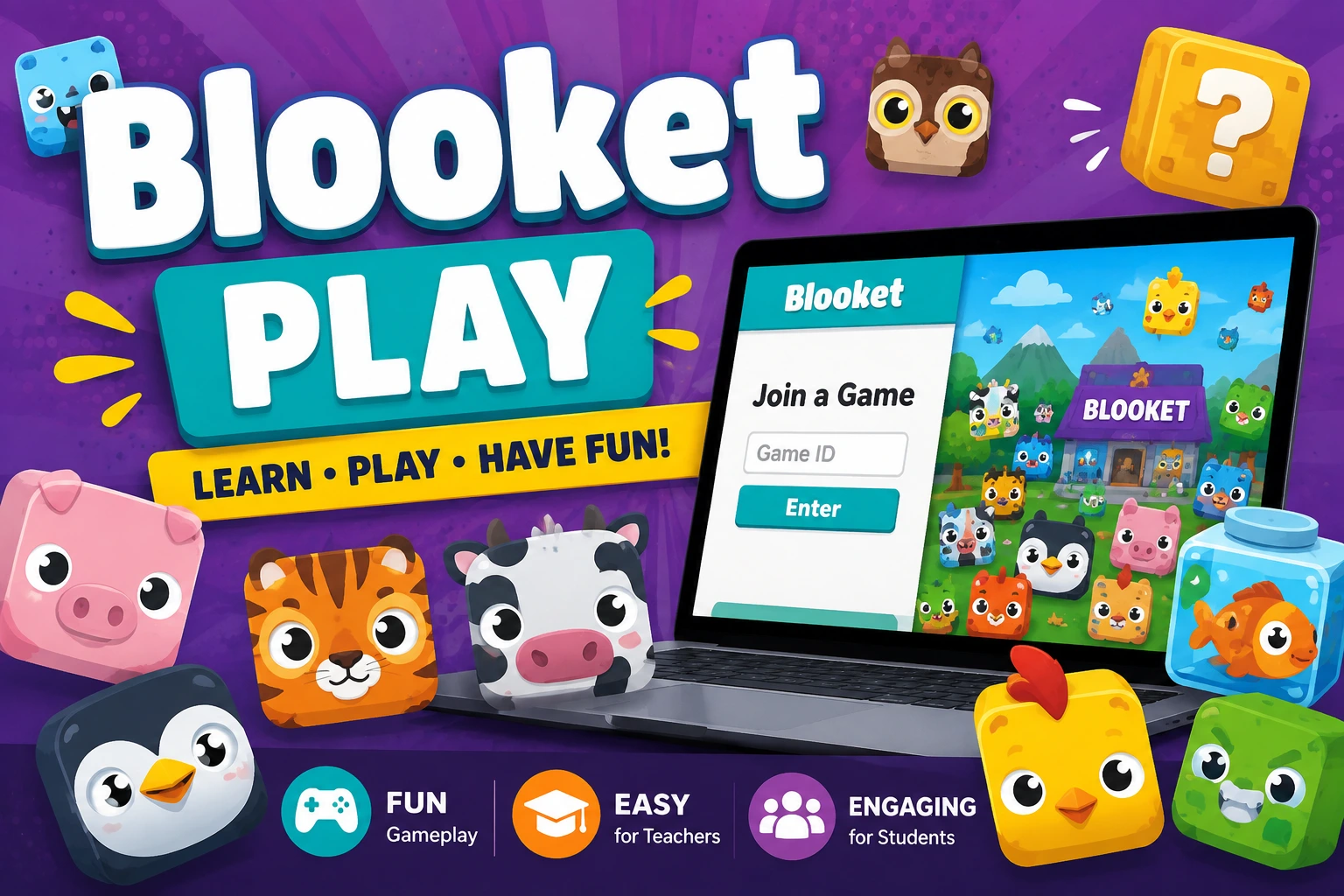
Blooket Play combines learning and gaming by allowing students to participate in interactive quiz games while helping teachers create engaging classroom experiences.
Many students and teachers search for Blooket Play when they want to understand how the popular classroom game platform actually works. Blooket combines quiz-style questions with game-based activities, turning ordinary review sessions into something more interactive. Because it shows up so often in classrooms, homework assignments, and remote learning settings, people naturally want a clear explanation of what it does.
This guide covers what Blooket Play is, how the platform works from both the teacher and student side, how to join a game, account and login basics, key features, common game modes, and realistic benefits and limitations. The goal is to give students, teachers, and parents a beginner-friendly overview of blooket play without exaggerating what the platform can or cannot do for learning outcomes.
What Is Blooket Play?
Blooket Play refers to the part of the Blooket platform where students actually participate in games, typically accessed through the play.blooket.com join screen. Teachers or hosts create or select a set of questions, then launch a live game session that students enter using a code. The underlying idea is simple: familiar quiz content delivered through a more game-like interface.
It is worth being clear that Blooket Play is a supplementary classroom tool rather than a replacement for direct instruction. It works best as a review activity, a way to check understanding, or a change of pace during a lesson. Teachers still decide what content students see, since the platform’s educational value depends heavily on the quality of the question sets being used.
How Does Blooket Play Work?
At a basic level, the process starts when a teacher creates or chooses an existing question set and selects a game mode to host. This generates a temporary game code, sometimes called a Game ID, that is unique to that specific session. Students then use this code to join the same lobby and take part in the same round of questions together.
Once a game begins, students answer the questions in whatever order and format the chosen mode requires, and correct answers typically translate into some kind of in-game reward, such as points, coins, or progress toward a goal. The exact scoring and reward structure varies by game mode, but the core mechanic of answering questions correctly to advance stays consistent across most modes.
How to Join a Blooket Game
Students generally join a live Blooket Play session by visiting the dedicated join page, entering the game code their teacher provides, and then choosing a nickname if the host has that option enabled. This process is designed to be quick, and in most cases no account or app download is required to join a game as a participant.
Teachers control several participation settings, including whether nicknames are open or restricted, how many players can join, and how long the session stays active. Because live session codes typically expire once the host ends the game, students should join promptly using the exact code shared in class rather than searching for codes from unrelated or unofficial sources online.
Blooket Login and Account Features
Teachers generally need an account to create question sets, host games, and access classroom management tools, while students can often join a live game as a guest without creating one. However, having a student account can allow progress, in-game currency, and customization options to be saved between sessions rather than resetting after each game ends.
Account requirements and available features can change as the platform updates over time, so specific login steps or account benefits should be confirmed through Blooket’s own support resources rather than assumed to stay fixed. This article avoids listing exact account features as permanent, since platforms like this one are updated periodically.
Blooket Features
Blooket Play offers several core features built around its question-and-game format. These typically include multiple game modes for the same content, a library of teacher-created and shared question sets, classroom hosting tools, and options for assigning games as homework rather than only playing them live during class time.
Additional features often include some form of reporting or results tracking for teachers, along with basic classroom controls such as managing who can join a session. Because Blooket continues to update its offerings, only features that are currently documented and verifiable should be treated as accurate, rather than older or discontinued tools some outdated guides may still mention.
Blooket Game Modes
One of the more distinctive aspects of Blooket Play is that the same question set can be played through different game modes, each with its own mechanics and pacing. Some modes emphasize speed and direct competition, where the fastest correct answers score the most points, while others involve building, collecting, or strategy elements layered on top of the quiz content.
The exact list of available modes has changed over time, with new modes added and older ones occasionally retired or replaced. Because of this, readers should verify current game modes directly through Blooket rather than relying on any single guide, including this one, as a permanent list. What stays consistent is the core idea of using correct answers to progress within whichever mode is selected.
How Teachers Use Blooket in the Classroom
Teachers commonly use Blooket Play for review sessions before tests, vocabulary practice, and reinforcing material covered in a recent lesson. Because sessions are relatively quick to set up, many educators use it as a way to close out a unit or check understanding without needing extensive additional preparation beyond writing the questions themselves. This approach reflects the wider use of digital tools in the classroom, where interactive technology can support engagement, assessment, and more flexible learning experiences.
Some teachers also assign Blooket games as homework using longer-lasting assignment codes, allowing students to complete them independently rather than only during class time. How effectively the platform supports learning depends largely on the teacher’s own instructional goals and the quality of the questions used, rather than being an automatic outcome of the platform itself.
How Students Use Blooket Play
From a student’s perspective, using Blooket Play generally means joining a session with a code, selecting a nickname if applicable, and then answering a series of questions within whatever game format the teacher has chosen. Repetition across multiple rounds can help reinforce material, particularly for review-style content like vocabulary or definitions.
The competitive and game-like structure can be motivating for some students, especially those who respond well to friendly competition or visual rewards. At the same time, this format may not suit every learner equally, since some students may find the pace stressful or prefer other study methods, so it should be viewed as one option among several rather than a universal solution.
Benefits of Blooket Play
Blooket Play can make routine review activities feel more interactive than a traditional worksheet or verbal quiz, which may help encourage participation from students who are otherwise less engaged. It also gives teachers a way to add variety into lesson planning without needing to build an entirely new activity from scratch each time. Other learning strategies, such as personalized feedback during SAT preparation, can also help students identify areas that need more focused practice.
Because the same question set can be reused across different game modes, teachers can vary the format of review sessions while keeping the underlying content consistent. This flexibility is a genuine practical benefit, though it should not be read as a guarantee that engagement automatically leads to improved grades or long-term learning outcomes for every student.
Limitations of Blooket
Like most digital classroom tools, Blooket Play requires a stable internet connection and a compatible device, which can be a barrier in some settings. The competitive nature of many game modes may also not appeal to every student, and for some learners, the game elements themselves can become a distraction from the actual content being tested.
The educational value of any given session depends heavily on the quality of the questions a teacher writes or selects, since a poorly constructed question set will not become more effective simply because it is delivered through a game. Readers should treat Blooket as one tool among many rather than assuming it automatically improves classroom outcomes on its own.
Is Blooket Safe for Students?
General online safety practices apply to Blooket Play the same way they apply to most classroom technology tools. Teachers are typically encouraged to actively monitor live sessions, and students should avoid sharing unnecessary personal information, particularly through open-text fields like nicknames, since these may be visible to the rest of the class.
Parents and educators considering any new digital learning tool are generally advised to review its features and settings themselves before widespread classroom use. This article does not claim that Blooket has known security issues, nor does it guarantee complete online safety, since no online platform can offer an absolute guarantee in that respect.
Blooket Play for Teachers and Educators
Educators may turn to Blooket Play as a way to create quizzes quickly, gauge how well students understood a recent topic, and increase overall classroom participation during review periods. Its game-based format offers an alternative to more traditional quiz delivery methods, which some teachers find useful for maintaining student attention during repetitive review content.
Whether Blooket fits a particular classroom depends on subject matter, grade level, and individual teaching style. This article does not present any professional endorsement or formal recommendation from an educational organization unless such an endorsement can be independently verified, since claims of that kind circulate online without always being accurate.
Blooket Play for Parents and Students
Parents encountering Blooket Play for the first time should understand that it is generally used as a supplementary classroom activity rather than a core curriculum platform on its own. Sessions are typically initiated and controlled by a teacher, meaning student participation usually happens within a structured classroom or assigned homework context rather than open-ended free play.
It is reasonable for parents to ask their child’s teacher how the platform is being used, what kind of content appears in question sets, and whether any account creation is required. Understanding how a digital learning tool fits into classroom instruction helps parents make informed decisions about their child’s use of it.
Blooket Review: Is It Worth Using?
Blooket Play offers a genuinely interactive format for classroom review, and many teachers find it useful for adding variety to lessons that might otherwise feel repetitive. Its strengths include ease of setup for hosting a session and a range of game modes that can be applied to the same underlying question content.
Its limitations are equally worth noting: the platform’s usefulness depends heavily on teacher-created content, and it is not designed to replace complete instruction on its own. Whether it is worth using ultimately depends on how a teacher integrates it into a broader lesson plan, rather than any inherent rating the platform holds by itself.
Blooket Alternatives
Several other platforms occupy similar space in the game-based learning category, including Kahoot!, Quizizz, and Gimkit. Each offers its own approach to combining quizzes with interactive or competitive gameplay, and teachers sometimes use more than one depending on the type of activity or lesson they are planning.
No single platform is universally better for every classroom, since factors like question format, game mechanics, and account features vary between them and may suit different teaching styles or age groups. Teachers considering alternatives to Blooket Play are generally better served by comparing specific features relevant to their own classroom needs rather than assuming one platform is always the superior choice.
Interesting Facts About Blooket Play
- Blooket is a game-based learning platform that combines quiz questions with interactive gameplay.
- Teachers can build or reuse question sets and apply them across multiple different game modes.
- Students typically join live sessions using a temporary game code entered on a dedicated join page.
- The same question content can be played through more than one game format depending on what the host selects.
- Live game codes generally expire once a hosted session ends, distinguishing them from longer-lasting homework assignment codes.
Blooket Play and Online Learning Trends
Game-based learning tools have become increasingly common in classrooms as teachers look for ways to support engagement during digital and in-person instruction alike. Platforms like Blooket Play reflect a broader trend of blending quiz-style assessment with interactive design, particularly for review and reinforcement activities rather than initial content delivery.
It is important not to overstate this trend’s impact. While interactive tools can make review sessions more engaging for many students, engagement alone does not guarantee improved academic results, and outcomes vary depending on how thoughtfully a teacher integrates any given tool into their overall instruction.
Conclusion
Blooket Play is a game-based educational platform that lets teachers turn quiz-style questions into interactive classroom activities, with students joining live sessions through a simple code-based system. It offers a flexible set of game modes built around the same underlying question content, along with options for live classroom play or independently completed homework assignments.
Its effectiveness ultimately depends on how it is used, including the quality of the questions a teacher creates and how it fits into a broader lesson plan rather than replacing direct instruction. Understood as a supplementary tool rather than a complete teaching solution, Blooket Play can be a useful addition to a teacher’s classroom toolkit.