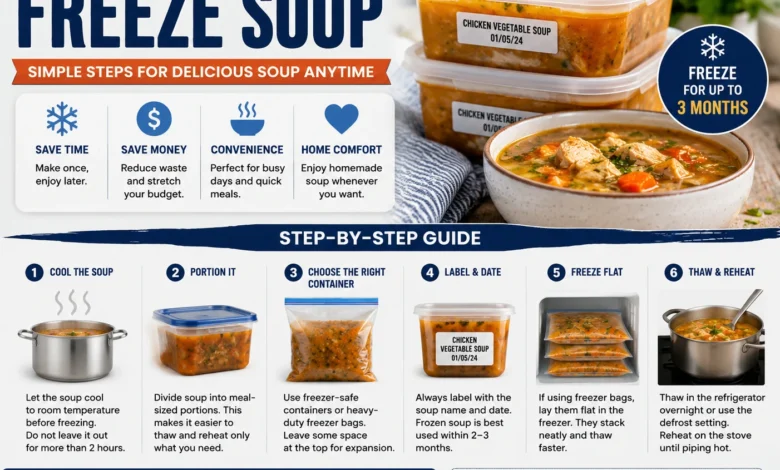
Learning how to freeze soup is a simple way to save time, reduce food waste and keep homemade meals ready for busy days. Whether you have prepared a large batch of vegetable soup, chicken broth or a creamy favourite, freezing it correctly helps protect its flavour, texture and freshness. The right containers, portion sizes and cooling methods can make a noticeable difference when the soup is thawed and reheated later.
However, not every soup or ingredient freezes in the same way. Pasta, rice, potatoes and dairy products may change texture if they are stored incorrectly. This guide explains how to freeze soup safely using freezer bags, glass jars, reusable containers and vacuum-sealed bags. It also covers portioning, storage times, thawing and reheating, helping you enjoy convenient homemade soup without unnecessary waste.
Why Freezing Soup Is a Smart Kitchen Habit
Learning how to freeze soup can make home cooking easier, cheaper and less wasteful. Instead of throwing away the final bowls from a large pot, you can save them for a busy evening, a quick lunch or a cold weekend. Frozen soup is also useful for meal preparation because it gives you a comforting homemade option when there is little time to cook. For a more complete comfort-food meal, you could also serve vegetable soup alongside a warm homemade-style broccoli tart.
Most vegetable, tomato, lentil, bean, chicken and meat-based soups respond well to freezing when they are cooled and packed correctly. The process is not difficult, but a few small details affect flavour and texture. Choosing the right container, leaving space for expansion and freezing useful portions will help the soup taste fresher when it is eventually thawed and reheated later.
How to Prepare and Cool Soup Before Freezing
The first step in how to freeze soup safely is cooling it promptly. Do not leave a large, steaming pan on the worktop for several hours, and do not place it directly beside frozen food. Divide the soup between shallow containers or smaller bowls so heat can escape more quickly, then refrigerate or freeze it within the recommended period for cooked leftovers.
Use clean containers, lids and utensils while transferring the soup, particularly when it contains cooked meat or dairy products. The UK Food Standards Agency advises cooling cooked food and placing it in the fridge within two hours. Once the soup is cold, portion and freeze it promptly rather than repeatedly moving it between room temperature and chilled storage at home.
Choosing the Best Containers for Frozen Soup
Freezer-safe tubs are reliable because they stack neatly, resist leaks and make it easy to see portion sizes. Silicone trays are helpful for smaller servings, while sturdy freezer bags save valuable space. Whatever you choose, check that it is designed for freezing. Ordinary takeaway boxes, thin bags and damaged lids may crack, split or allow air to reach the soup during storage.
Leave a small gap at the top of every tub or jar because liquid expands as it freezes. Press lids firmly into place, wipe away spills and label each container with the soup name and freezing date. Clear labelling prevents confusion and helps you use older batches first. It is also useful to write whether the container holds one serving or enough for the whole family.
How to Freeze Soup in Bags and Individual Portions
People searching for how to freeze soup in bags should choose strong freezer bags rather than thin sandwich bags. Place the open bag inside a bowl or measuring jug, fold the top over the rim and carefully ladle in completely cooled soup. Remove most of the air, close the seal securely and check for leaks before laying the bag flat on a baking tray.
Flat freezing creates thin, stackable packs that can be arranged like books in a freezer drawer. This method also works well when learning how to freeze soup in portions or Ziploc-style bags. Measure one or two servings into each bag so you only thaw what is needed. Smaller portions freeze and reheat more evenly than one large, solid block of soup.
How to Freeze Soup Without Plastic
Freezer-safe glass containers, straight-sided jars and reusable silicone pouches are practical choices for anyone exploring how to freeze soup without plastic at home. Glass must be suitable for freezer use because ordinary jars may crack as the liquid expands. Allow the soup to cool fully, avoid sudden temperature changes and leave generous space between the soup and the lid before freezing.
Stainless-steel food containers are another durable option, although their contents cannot be seen without opening them every time. A label is therefore essential. Choose container sizes that match your usual meals, and avoid freezing an entire pot in one vessel. Smaller glass or steel containers are easier to thaw, safer to handle and less likely to leave unwanted leftovers after reheating.
Using Glass Jars, Tupperware and Vacuum Sealers
When learning how to freeze soup in glass jars, select wide, straight-sided jars marked as freezer-safe during storage. Narrow shoulders can restrict expanding liquid and increase pressure on the glass. Never pour boiling soup into a cold jar or move hot glass directly into the freezer. Cool everything gradually, inspect the jar for chips and keep enough headspace below the lid.
Tupperware-style tubs are easier to fill, while a vacuum sealer can reduce the amount of air surrounding frozen soup. Liquid should normally be pre-frozen in a tray or container before vacuum sealing, otherwise it may be drawn towards the machine. Transfer the firm soup block into a FoodSaver bag, keep the sealing edge clean and follow the appliance manufacturer’s instructions.
Which Soups Freeze Well and Which Need Extra Care
Broth-based, tomato, vegetable, lentil and bean soups usually keep their character well after freezing at home. Blended soups are especially convenient because they contain fewer large pieces that can soften during thawing. You can also freeze soup stock in small tubs, freezer bags or silicone cube trays, making it easy to add measured amounts to sauces, stews and future soup recipes.
Pasta and rice continue absorbing liquid, so they may become soft or swollen after thawing. Large potato pieces can turn grainy, while cream, milk and yoghurt may separate. For better results, freeze the soup base before adding these ingredients. Fresh pasta, cooked rice, cream or cheese can then be stirred in while reheating, improving both the appearance and final texture. For another convenient ingredient for creamy recipes, explore our guide to using coconut milk powder in soups and other homemade dishes.
How Long Frozen Soup Lasts and How to Reheat It
For the best eating quality, use frozen soup within a few months and keep it continuously frozen until needed. Airtight packaging helps protect it from freezer burn, which can create dry patches, extra ice crystals and weaker flavour. Maintain a simple freezer list, rotate older portions towards the front and discard any container that has broken, leaked or lost its secure seal.
The safest approach is to thaw soup in the fridge before reheating, although a small frozen portion can be warmed slowly in a saucepan before serving it. Stir regularly so heat reaches the centre and make sure the soup is steaming hot throughout. The Food Standards Agency recommends reheating leftovers only once, so warm only the amount you plan to eat.
Common Mistakes That Can Spoil Frozen Soup
One common mistake is overfilling the container, which leaves no room for expansion and may force the lid open. Other problems include using weak bags, forgetting labels, freezing hot soup and choosing portions that are too large. Air trapped inside packaging can also encourage freezer burn, so remove excess air from bags and use containers that fit the amount of soup closely.
Another mistake is expecting every ingredient to return to its original texture after freezing for another meal. Dairy may separate, pasta can become mushy and potatoes may feel mealy. Plan the recipe with freezing in mind and add delicate ingredients later when possible. Avoid thawing soup for hours on the kitchen counter, and do not repeatedly cool and reheat the same batch.
FAQs
Can You Freeze Homemade Soup?
Yes, most homemade soups can be frozen successfully. Vegetable, lentil, tomato, chicken, bean and meat-based soups usually retain their flavour and texture well. Allow the soup to cool properly before transferring it into freezer-safe bags or containers. Leave some empty space at the top because liquid expands during freezing. Label the container with the soup name and freezing date.
How Long Can You Keep Soup in the Freezer?
Homemade soup is generally best used within two to three months for the best flavour and texture. It may remain safe for longer if continuously frozen, but the quality can gradually decrease. Air exposure can cause freezer burn, ice crystals and weaker flavour. Use airtight packaging, label every portion and organise your freezer so older batches are used before newer ones.
Can You Freeze Soup in Freezer Bags?
Yes, freezer bags are one of the easiest and most space-saving options. Allow the soup to cool completely, then pour it into a strong freezer bag placed inside a bowl. Remove excess air, close the seal securely and freeze the bag flat on a baking tray. Once solid, the bags can be stacked neatly or stored upright in a freezer drawer.
Can You Freeze Soup in Glass Jars?
Soup can be frozen in glass jars, but the jars must be specifically marked as freezer-safe. Use straight-sided jars and leave enough headspace for the liquid to expand. Never pour boiling soup into cold glass or place a hot jar directly into the freezer. Thaw the jar gradually in the fridge to reduce the risk of cracking or breaking.
Can You Freeze Soup With Cream or Milk?
Yes, creamy soup can be frozen, although milk, cream and yoghurt may separate or become grainy after thawing. For the best texture, freeze the soup before adding dairy, then stir in fresh cream or milk while reheating. When dairy is already included, warm the soup gently over low heat and stir regularly instead of boiling it aggressively.
Can You Freeze Soup With Potatoes?
Soup containing potatoes can be frozen, but large potato pieces may become grainy or mealy after thawing. Waxy potatoes and blended potato soups usually freeze better than soups containing large floury potato chunks. For improved texture, add freshly cooked potatoes during reheating or blend the soup before freezing. Always cool and store the soup in suitable freezer-safe containers.
Can You Freeze Soup With Pasta or Rice?
Soup with pasta or rice can be frozen, but these ingredients may absorb liquid and become soft or mushy during storage. A better approach is to freeze the soup base without pasta or rice. Cook them separately and add them while reheating. When they are already included, you may need to add extra stock or water to improve the consistency.
Can Frozen Soup Be Reheated Without Thawing?
Small frozen portions can usually be reheated directly in a saucepan. Place the frozen soup over low heat, add a small amount of water or stock and stir as it begins to soften. Larger portions should preferably be thawed overnight in the fridge. Make sure the soup is steaming hot throughout before serving and avoid reheating the same portion more than once.
What Is the Best Container for Freezing Soup?
The best container depends on your available freezer space and preferred portion size. Freezer bags save space, plastic tubs are easy to stack and glass containers reduce disposable plastic use. Silicone trays are useful for individual portions. Whatever option you choose, make sure it is freezer-safe, airtight and large enough to leave some room for the soup to expand.
Can You Refreeze Soup After It Has Been Thawed?
Refreezing soup is generally best avoided because repeated freezing and thawing can reduce its flavour and texture. It is safer and more convenient to freeze soup in individual portions so you only thaw what you need. When soup has been fully reheated, cooled again or left at room temperature for too long, it should not be returned to the freezer.
Conclusion
Understanding how to freeze soup properly turns leftovers and batch cooking into convenient future meals for later use. Cool the soup promptly, select freezer-safe packaging, divide it into sensible portions and leave room for expansion. Freezer bags are excellent for saving space, while glass, silicone and steel options suit people who want reusable storage with less reliance on disposable plastic.
Good results also depend on what happens after freezing. Thaw the soup safely, heat it thoroughly and refresh the texture with stock, herbs, pasta or dairy when needed. By labelling every portion and avoiding common storage mistakes, you can enjoy homemade soup on demanding days without sacrificing flavour, creating unnecessary waste or spending extra money on another meal at home.


