Olive oil is a popular kitchen ingredient used for cooking, salad dressings, marinades, and many everyday recipes. Olive oil is also commonly used in different cooking methods and recipes where ingredient quality can affect the final taste and texture. However, many people wonder how long does olive oil last and whether an old bottle is still good to use. Like most food products, olive oil does not stay at the same quality forever.
The freshness of olive oil depends on several factors, including the type of oil, whether the bottle has been opened, packaging, and storage conditions. Exposure to heat, light, and oxygen can gradually reduce its flavor, aroma, and overall quality.
In this guide, you will learn about olive oil shelf life, expiration dates, storage methods, signs of spoiled oil, and how to keep olive oil fresh for as long as possible.
What Is the Shelf Life of Olive Oil?
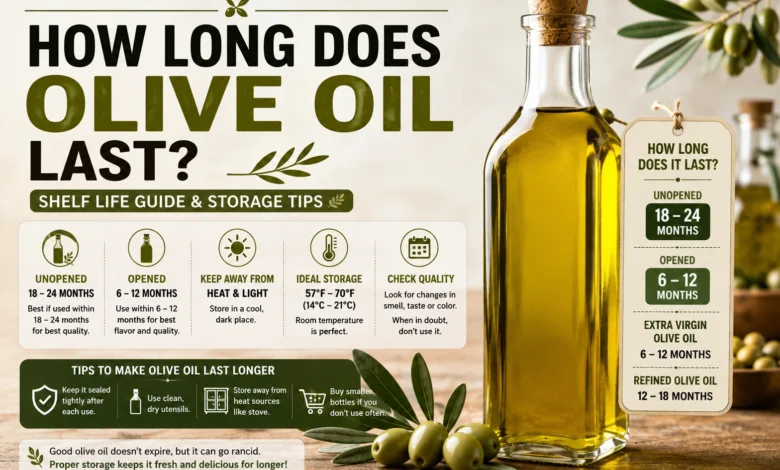
The average shelf life of olive oil is usually around two years from the date it is produced, although the quality can begin changing before that time depending on storage conditions. Unopened bottles generally maintain their best quality longer because they have limited exposure to oxygen.
Once opened, olive oil begins to lose freshness more quickly because air enters the bottle every time it is used. Proper storage can slow down this process and help maintain the oil’s flavor and quality.
Extra virgin olive oil often has a shorter quality window compared with refined olive oil because it contains natural compounds that contribute to its flavor and aroma. Refined olive oil is usually more stable because it has undergone additional processing.
The answer to how long does olive oil last depends on the oil type, packaging, and how carefully it is stored. A bottle kept in a cool, dark place may stay fresh much longer than one exposed to heat and sunlight.
Does Olive Oil Expire?
Yes, olive oil can expire in terms of quality. Most bottles include a best-by date that indicates how long the manufacturer expects the oil to maintain its ideal taste and freshness. After this date, the oil may still look normal, but its flavor and aroma may gradually decline.
Olive oil becomes less fresh over time because of oxidation. When oil is exposed to oxygen, it slowly changes, which can affect its taste and smell. This process does not happen instantly but develops gradually.
An expired olive oil bottle does not always mean the product is immediately unusable. However, older oil may have a stale, unpleasant, or rancid flavor. Checking the smell and taste can help determine whether the oil has lost its quality.
How Long Does Olive Oil Last After Opening?
Many people ask how long does olive oil last after opening because opening the bottle changes how quickly the oil ages. Once exposed to air, oxygen begins interacting with the oil, which can slowly reduce freshness.
Opened olive oil is generally best used within several months to maintain good flavor and quality. The exact timeline depends on the type of oil, how often the bottle is opened, and where it is stored.
To help extend freshness after opening:
- Keep the bottle tightly sealed when not in use.
- Store it away from heat and sunlight.
- Avoid leaving the bottle open for long periods.
- Use clean utensils when handling the oil.
Proper storage practices can help slow oxidation and preserve the original taste of the oil.
How to Tell If Olive Oil Has Gone Bad
Knowing how to tell if olive oil is bad can help you avoid using oil that has lost its quality. Spoiled or old olive oil often develops noticeable changes in smell, taste, and overall freshness.
One common sign is a rancid smell. Fresh olive oil usually has a pleasant, mild aroma, while old oil may smell stale, waxy, or similar to old nuts. A strange odor is often one of the easiest ways to identify quality problems.
Other signs include:
- A flat or unpleasant taste.
- A noticeable loss of the original flavor.
- A bitter or stale aftertaste.
- Changes that make the oil unpleasant to use.
An olive oil freshness test usually involves smelling the oil first and then tasting a small amount if the smell seems normal. If the flavor is unpleasant, the oil may no longer be good quality.
How Long Does Extra Virgin Olive Oil Last?
Extra virgin olive oil is one of the highest-quality types of olive oil and is valued for its flavor, aroma, and natural characteristics. However, because it is minimally processed, its freshness can depend heavily on storage and production quality.
Many people wonder how long does extra virgin olive oil last because this type of oil may lose its best flavor faster than more processed varieties. Properly stored extra virgin olive oil can often maintain good quality for a significant period, but freshness gradually decreases over time.
Packaging plays an important role. Extra virgin olive oil stored in dark glass bottles or protected containers is usually better shielded from light exposure than oil stored in clear bottles.
Keeping extra virgin olive oil away from heat, oxygen, and direct sunlight helps preserve its taste and aroma for longer.
How to Store Olive Oil Properly
Learning how to store olive oil correctly is one of the best ways to protect its quality. Proper ingredient storage is an important part of maintaining freshness when preparing homemade meals and everyday recipes. Storage conditions have a major impact on how quickly olive oil loses freshness.
The ideal storage location is a cool, dark cabinet away from appliances that produce heat. Keeping olive oil near a stove, oven, or window can expose it to temperatures and light that may speed up quality loss.
Important olive oil storage tips include:
- Store olive oil in a cool area.
- Keep it away from direct sunlight.
- Close the bottle tightly after use.
- Avoid frequent temperature changes.
- Use dark-colored bottles when possible.
Dark glass bottles and properly sealed containers help reduce exposure to light and oxygen. These simple steps can help maintain the oil’s flavor and freshness.
Can You Use Olive Oil After the Expiration Date?
Many people wonder how long can olive oil be used after expiration date because they may find an older bottle in their kitchen. A best-by date mainly indicates quality, not necessarily the exact moment when the oil becomes unusable.
After the expiration date, olive oil may still maintain acceptable quality if it has been stored properly. However, the flavor, aroma, and freshness may decline over time.
Before using older olive oil, check its smell and taste. If it has a rancid odor, unpleasant flavor, or noticeable quality changes, it may be better to replace it.
Storage conditions matter greatly. A properly stored bottle may maintain quality longer than one that has been exposed to heat or sunlight.
Factors That Affect Olive Oil Shelf Life
Several factors influence olive oil shelf life and determine how quickly the oil loses freshness. Understanding these factors can help you protect your olive oil and avoid unnecessary waste.
Light exposure is one major factor. Direct sunlight or strong kitchen lighting can affect oil quality over time. This is why many olive oils are packaged in dark containers.
Temperature also plays an important role. Heat can speed up oxidation, causing the oil to lose its original flavor more quickly. Keeping olive oil in a stable, cool environment helps maintain quality.
Other factors include:
- Oxygen exposure: Frequent opening introduces air into the bottle.
- Bottle type: Dark containers provide better protection from light.
- Oil quality: Higher-quality oils may have different freshness timelines.
- Storage location: Cabinets are usually better than countertops near heat sources.
How Long Do Different Types of Olive Oil Last?
Different types of olive oil have different storage expectations. The processing method, quality level, and packaging can influence how long each type remains fresh.
| Olive Oil Type | Average Shelf Life | Storage Notes |
| Extra Virgin Olive Oil | Around 18–24 months | Store in dark, cool conditions to protect flavor |
| Virgin Olive Oil | Around 18–24 months | Keep tightly sealed and away from heat |
| Refined Olive Oil | Around 2 years or longer | Usually more stable due to processing |
| Blended Olive Oil | Around 1–2 years | Store properly to maintain quality |
These timeframes are general estimates. The actual freshness depends on production date, storage conditions, and how the bottle is handled.
Common Mistakes That Make Olive Oil Spoil Faster
Many people unintentionally shorten the life of their olive oil by storing it incorrectly. Small changes in storage habits can help maintain quality and prevent faster deterioration.
One common mistake is keeping olive oil near the stove. Heat from cooking appliances can gradually affect the oil. Leaving bottles open or loosely closed also allows more oxygen exposure.
Other mistakes include:
- Buying large amounts that are not used quickly.
- Storing oil in clear containers.
- Ignoring best-by dates.
- Keeping bottles in warm areas.
- Exposing oil to frequent temperature changes.
Choosing the right storage location and using olive oil regularly can help maintain better freshness.
Conclusion
Understanding how long does olive oil last can help you store and use this kitchen essential more effectively. Olive oil has a limited shelf life, and factors such as opening, storage conditions, heat, light, and oxygen exposure can influence how long it stays fresh.
Proper storage is the best way to maintain olive oil quality. Keeping it in a cool, dark place, sealing the bottle tightly, and avoiding unnecessary exposure can help preserve its flavor.
Checking the smell, taste, and storage conditions can help you determine whether your olive oil is still fresh. By following simple storage practices, you can enjoy better-quality olive oil and reduce unnecessary waste.