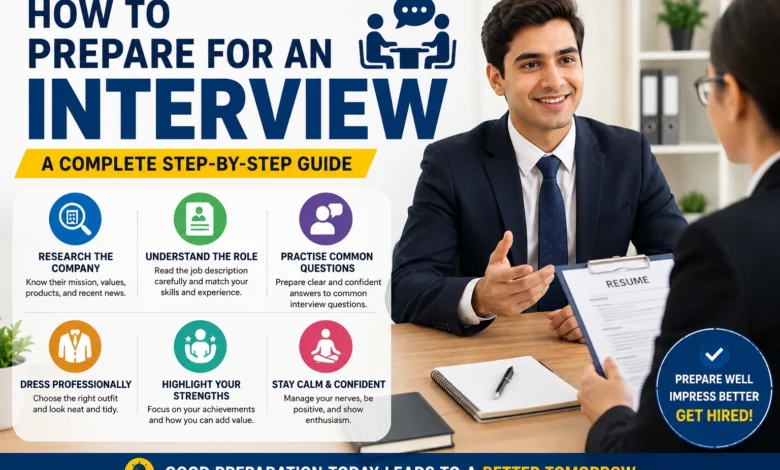
Learning how to prepare for an interview helps you walk in with confidence instead of guesswork. An interview lets an employer see your skills, communication style, experience, and fit for the role, and good preparation lowers nervousness while helping you give clearer answers. This guide covers company research, practice questions, clothing, documents, body language, virtual interviews, and what to do once the conversation ends.
Understand the Job Description
Read the posting closely and note the required skills, responsibilities, and any tools or software mentioned. These details show what the employer values most, and connecting your own education and past roles to that list is a core part of how to prepare for an interview.
Research the Company
Check the company website, its About page, products, recent news, and social media to see how the business operates and what tone it uses with customers. This helps you give more relevant answers, but avoid simply memorizing facts, since interviewers can usually tell when someone recites information instead of understanding it.
Know the Interview Format
Interviews may happen in person, by phone, on video, or with a panel, and some employers add technical tests or multiple rounds. If the format is unclear, ask the recruiter directly so you can prepare properly.
Review Your Resume and Application
Reread your resume, cover letter, portfolio, and LinkedIn profile, since interviewers often ask about anything listed there. If there is an employment gap or unclear detail, prepare an honest explanation ahead of time.
Prepare Your Personal Introduction
Most interviews open with “Tell me about yourself.” Prepare a short introduction covering your background, relevant skills, and reason for applying. A beginner applying for a digital marketing internship might mention studying communications, completing a social media class project, and wanting to apply those skills on a real team. Keep it natural, not overly rehearsed.
Practice Common Interview Questions
Practicing common questions helps organize your thoughts. Expect questions about why you want the job, your strengths, and where you see yourself in five years. Understand the point of each answer rather than memorizing exact wording, so responses still sound genuine.
Use the STAR Method for Behavioral Questions
STAR stands for Situation, Task, Action, and Result, and it works well for questions about teamwork or problem-solving. For example, describe a group project where a teammate missed a deadline and how you reorganized tasks so it finished on time.
Prepare Examples of Your Skills
Employers respond better to real examples than general claims. Instead of saying you communicate well, describe a situation where it made a clear difference. Students can draw examples from university projects, volunteer work, internships, or freelance work, Freelance experience across different industries can also demonstrate adaptability, communication and problem-solving skills to an employer. which count as valid proof of skills even without full-time job history. Candidates who want to strengthen their qualifications can also explore online courses for career growth and learn skills connected with modern job roles.
Learn How to Discuss Your Strengths
Choose strengths relevant to the job rather than generic traits, since saying only that you are hardworking rarely stands out. Support each strength with a short example, such as learning new software quickly or helping frustrated customers stay calm.
Prepare a Professional Weakness Answer
Answer weakness questions honestly by choosing a genuine area you are improving, such as public speaking or delegating tasks, and explain the steps you are taking to improve. Avoid disguised strengths like claiming you work too hard, since interviewers often notice this. A professional competence framework can help you identify your strengths and areas for improvement before discussing them in an interview.
Prepare Questions to Ask the Interviewer
Prepare thoughtful questions about daily responsibilities, team structure, training, and next steps in the hiring process, but avoid ones easily answered by the website. Salary questions are usually more appropriate once the employer raises the topic.
Plan What to Wear
What to wear to an interview depends on the company, industry, and format. Clean, simple, professional clothing works well for office, retail, and technology roles, and checking the company’s social media can reveal its everyday style. For video interviews, dress professionally on top since you will be visible on camera.
Prepare Important Documents
Gather copies of your resume, the job description, a portfolio if relevant, certifications, a reference list, and identification. Place these in a clean folder, or keep digital copies organized for virtual interviews.
Plan Your Travel and Timing
Confirm the address, travel route, parking, and interview time in advance, including the time zone for remote interviews. Arriving ten to fifteen minutes early works well, and keeping the recruiter’s contact information handy helps in case of delay.
Prepare for a Virtual Interview
Test your internet connection, camera, microphone, and the interview platform beforehand, and choose a quiet spot with a tidy, well-lit background. Place the camera at eye level and join a few minutes early.
Improve Your Interview Body Language
Interview body language communicates almost as much as your words, so maintain natural eye contact, sit upright, smile politely, and listen without interrupting. Avoid forced gestures, and during video calls, look at the camera occasionally rather than only your own image.
Manage Interview Nervousness
Feeling nervous is completely normal. To calm interview nerves, try breathing slowly, preparing early, practicing aloud, sleeping well, and limiting caffeine. If a question is difficult, pause briefly and focus on having a genuine conversation rather than a flawless performance.
Practice With a Mock Interview
A mock interview is a practical way to learn how to prepare for an interview, since a friend, teacher, or mentor asks you interview-style questions and highlights areas that need work. Recording a session lets you review your pace, posture, and filler words.
Learn How to Handle Difficult Questions
If you do not know an answer, stay calm and ask the interviewer to clarify the question. Difficult topics may include employment gaps or a previous job change, so answer honestly and focus on what you learned rather than the negative details.
Prepare for Salary Questions
Research the general salary range for the role based on location, experience, and industry so you can respond with confidence. When appropriate, give a reasonable range instead of one exact figure, and remember compensation can also include benefits and career growth.
What to Do During the Interview
Greet the interviewer politely, listen carefully, and answer the actual question asked with relevant, concise examples. Avoid interrupting, speaking negatively about former employers, or checking your phone, and ask for clarification if a question is unclear.
What to Do After the Interview
Write down important names, topics discussed, and next steps mentioned by the interviewer. Then send a short thank-you email within a day that references something specific from the conversation and confirms your interest in the role.
Create an Interview Preparation Checklist
This checklist summarizes how to prepare for an interview from start to finish:
- Review the job description
- Research the company
- Review your resume and application
- Practice common interview questions
- Prepare STAR method examples
- Select appropriate clothing
- Gather important documents
- Test your technology for virtual interviews
- Plan your travel and timing
- Prepare questions to ask the interviewer
- Confirm interview details in advance
- Send a follow-up message afterward
Common Interview Preparation Mistakes
Common mistakes include skipping company research, memorizing scripted answers, arriving late, wearing clothing that does not match the workplace, giving vague examples, criticizing past employers, and skipping a follow-up message. Avoid these by researching thoroughly, understanding rather than memorizing your answers, dressing appropriately, preparing specific examples, staying professional, and always sending a brief thank-you note.
Conclusion
Knowing how to prepare for an interview means reviewing the job description, researching the company, practicing your answers, preparing real examples, organizing documents, and arriving on time. Stay honest, calm, and professional throughout. Preparation cannot guarantee a job offer, but it can help you present your skills and experience more clearly and confidently.
FAQs
How should I prepare for an interview the night before?
Review the job description and your key talking points briefly. Lay out your clothing, confirm your documents, and get a full night’s sleep so you feel alert the next day.
What should I bring to a job interview?
Bring copies of your resume, the job description, identification, a reference list, and a pen and notebook. Organize everything in a clean folder or a well-arranged digital file.
How early should I arrive for an interview?
Arriving around ten to fifteen minutes early is generally appropriate. This gives you time to settle in without arriving so early that it becomes inconvenient for the interviewer.
How do I answer “Tell me about yourself”?
Give a short summary of your background, relevant skills, recent experience, and reason for applying. Keep it focused and natural rather than reciting your entire resume.
What should I wear to an interview?
Choose clean, simple, professional clothing suited to the company and industry. Checking the company’s website or social media can help you understand its typical workplace style.
How can I stop feeling nervous before an interview?
Try slow breathing, thorough preparation, and practicing your answers aloud beforehand. Getting enough sleep and eating a light meal can also help you feel calmer.