
Plangud is a word many English speakers meet for the first time online. In Estonian, plangud is the plural of plank, the thick wooden boards used in building. Newer websites also use Plangud as a name for planning ideas. Those two uses are different, and this guide keeps them separate.
What Does Plangud Mean?
Plangud is Estonian for planks. A plank is a long, flat piece of sawn timber, thicker than a thin board but thinner than a heavy beam. Estonian dictionary descriptions place a plank at roughly 5 to 10 centimeters thick, about 2 to 4 inches. That thickness gives a plank its strength for floors, decks, and outdoor structures.
What Is a Plank?
A plank is sawn timber with a wide face and a defined thickness. It is cut from a log, dried, and often planed smooth. Planks are used where a surface needs to carry weight, resist weather, or last for years. Common uses include construction framing, decking, flooring, fences, benches, boats, and sauna benches. A deck board is both the walking surface and part of the structure below it.
Common Plank Types and Thicknesses
Not all planks are the same size. A construction plank that carries a load needs to be thicker than a decking plank, and a grilling plank is much thinner because it is used for cooking, not for building.
| Type | Typical thickness | Common use |
|---|---|---|
| Construction planks | 38–50 mm | Framing, structural work |
| Decking planks | 25–28 mm | Outdoor decks, walkways |
| Grilling planks | 5–10 mm | Cooking food, especially salmon |
Thinner planks suit cladding, while thicker planks suit floors and load-bearing parts.
How to Use Planks Around the Home
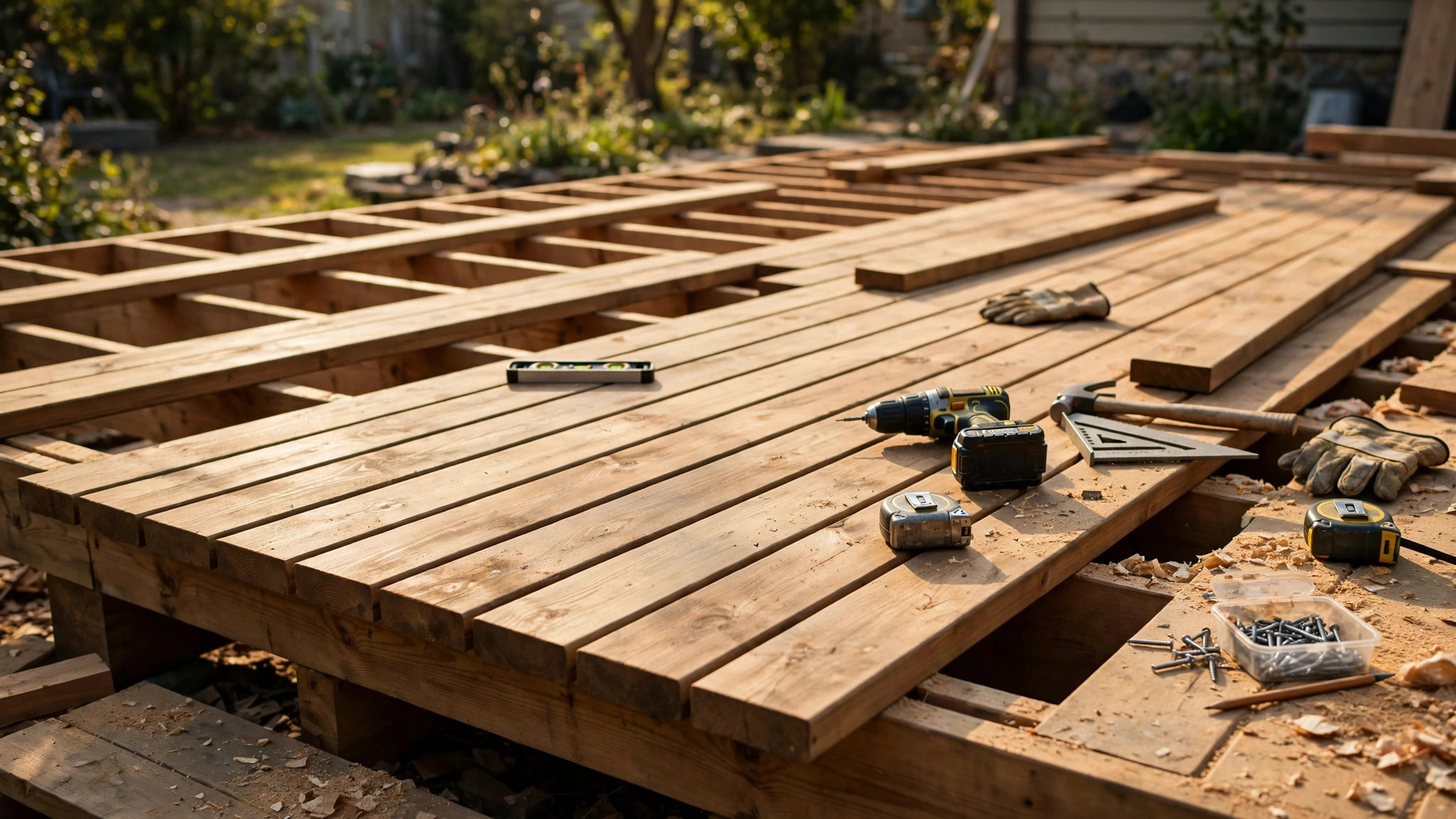
For decking, choose planks rated for outdoor use and leave a small gap between boards so water can drain.
For more home design ideas, see our Acamento design guide. For flooring, make sure the subfloor is level and dry, and allow the planks to acclimatize in the room before fitting. For fences, use treated timber where wood will touch soil or stay wet.
- Decking: outdoor-rated planks, spaced for drainage and movement
- Flooring: dry, level subfloor, planks acclimatized before fitting
- Fences: treated timber and coated fixings for wet conditions
- Benches and sauna: smooth, untreated wood that is comfortable and safe
- Boats: marine-grade timber and fixings suited to water exposure
Plank Grilling: A Food Use

A food-grade plank, often cedar, is soaked in water, placed on a grill, and used as a cooking surface for fish such as salmon. The plank protects the fish from direct flame, adds a mild wood aroma, and helps keep the fish moist. Only use planks sold for food use, with untreated wood and no paint, stain, or chemical treatment. Never use a construction plank for cooking. Food-grade planks are thin, usually 5 to 10 millimeters.
Plangud as a Planning Term: What Is Confirmed
Some modern websites also use Plangud as a name for a planning or productivity framework, or as a brand name. That is a modern interpretation, not the historical Estonian meaning. There is no single confirmed owner, official standard, or official manual that defines Plangud as a planning method.
If a page talks about planks, thickness, or decking, it is using the timber meaning. If it talks about tasks or productivity without mentioning wood, it is using the newer brand meaning.
How to Choose the Right Plank
Start with the job, then choose the timber.
Learn how to choose home materials in our wool mats guide. A deck plank needs weather resistance, a floor plank needs stability, and a grilling plank needs to be food-safe and untreated. Buy from a supplier who can tell you the species, moisture content, and treatment.
Conclusion
Plangud means planks in Estonian, and planks are thick wooden boards used for construction, decking, flooring, fences, benches, boats, sauna, and grilling. Construction planks are typically 38 to 50 millimeters thick, decking planks are typically 25 to 28 millimeters, and grilling planks are typically 5 to 10 millimeters. The planning use is a modern interpretation with no single confirmed owner or standard.
Frequently Asked Questions
What does Plangud mean?
Plangud is the Estonian plural of plank. It refers to thick wooden boards, roughly 5 to 10 centimeters thick, used for construction and everyday woodwork.
What are planks used for?
Planks are used for construction, decking, flooring, fences, benches, boats, sauna benches, and grilling. The right use depends on thickness, species, and treatment.
How thick is a construction plank?
Construction planks are typically 38 to 50 millimeters thick. Check the supplier’s specification and local building rules for your project.
Can I use any plank for grilling?
No. Only use food-grade, untreated planks sold for cooking. Do not use construction planks, painted wood, or treated wood for food.
Is Plangud a planning method?
Some modern websites use Plangud as a planning name, but that is a modern interpretation, not the historical Estonian meaning. There is no single confirmed owner, standard, or official manual for it.