
Introduction — Why Ethernet Still Matters in the Wireless Era
With the rise of powerful Wi-Fi standards like Wi-Fi 6 and the anticipated launch of Wi-Fi 7, it may seem like wired connections are becoming a thing of the past. After all, today’s wireless routers offer multi-gigabit speeds, smart traffic management, and wide coverage. Yet, when it comes to real-world performance—especially in demanding applications like gaming, 4K/8K streaming, or setting up a stable home network—Ethernet remains a go-to solution for many users. Among the various Ethernet cable types, Cat6 stands out as one of the most commonly used for home networking. But is it still good enough in 2025, or should users consider upgrading to newer, more expensive alternatives?

What Is Cat6 Cable? A Quick Overview
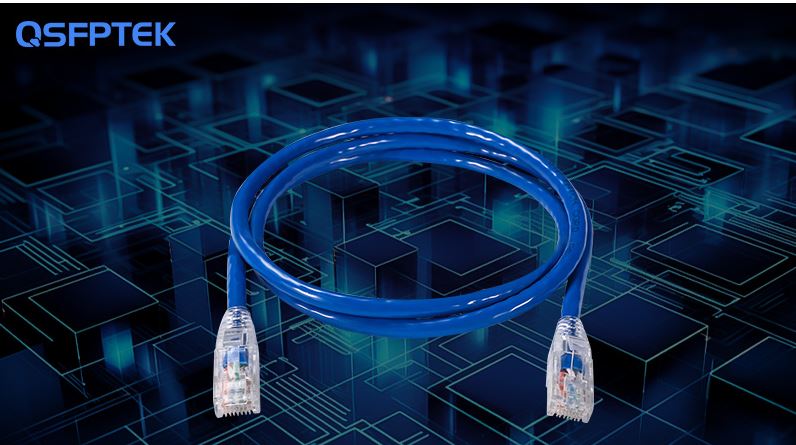
Cat6, short for Category 6, is a twisted-pair Ethernet cable standard designed to support high-speed data transmission. It is capable of handling bandwidth up to 250 MHz and supports speeds of up to 10 Gbps over short distances, typically up to 55 meters. Over distances up to 100 meters, it reliably supports 1 Gbps speeds. The internal structure of Cat6 cables typically includes tighter twists and sometimes a physical separator to reduce crosstalk and interference. Available in both unshielded (UTP) and shielded (STP) variants, Cat6 offers an improvement over its predecessor, Cat5e, not just in raw speed, but also in signal quality and resistance to electromagnetic interference.
Cat6 Performance in Real-Life Scenarios
In practical terms, Cat6 performs impressively well across most home networking use cases, including gaming, video streaming, and connecting multiple smart devices.
For gamers, low latency and a stable connection are far more important than raw throughput. While a game may only use a few megabits per second of bandwidth, even a momentary spike in latency or a dropped packet can be the difference between winning and losing. Cat6 cables provide a consistent and low-latency connection that Wi-Fi—even the latest versions—can struggle to match, especially in congested or interference-prone environments. Using a Cat6 cable between a gaming PC or console and the router ensures that ping remains low and connection quality stays stable during online matches.
Streaming is another area where Cat6 shines. Whether you’re watching 4K movies on Netflix, live-streaming a concert, or hosting a Zoom video call, your connection needs to be both fast and stable. While Wi-Fi may offer theoretical speeds above 1 Gbps, real-world conditions such as wall interference, competing devices, and signal drop-off can reduce actual performance. A wired Cat6 connection ensures smooth playback, minimal buffering, and fast loading times—even when multiple people in the household are streaming at once.
Beyond individual activities, Cat6 cables are particularly valuable in building a strong home network. For households using a NAS (Network Attached Storage), media server, or smart home hub, wired connections offer consistent data transfer rates and fewer disruptions than wireless alternatives. Transferring large files, backing up data, or streaming locally stored HD video is noticeably faster and more reliable over Cat6. Even for mesh Wi-Fi systems, running a Cat6 Ethernet backhaul between nodes can significantly improve overall network stability and coverage.
Cat6 vs. Other Cable Types for Home Use
When deciding whether Cat6 is sufficient, it’s natural to compare it to both older and newer cable types. Compared to Cat5e, which supports similar gigabit speeds but has less noise resistance and limited performance at higher frequencies, Cat6 provides a clear upgrade in terms of future-proofing and signal quality. While the cost difference between Cat5e and Cat6 is relatively small, the performance improvements in busy or high-interference environments are noticeable.
On the other hand, Cat6a and Cat7 offer even higher performance, with Cat6a supporting 10 Gbps over the full 100-meter length and Cat7 offering even better shielding. However, for most home users, the benefits of these cables are marginal unless you are running a high-performance 10G network across a large house or through extremely interference-heavy areas. These higher-grade cables are also thicker, less flexible, and more expensive, which may be unnecessary for typical home use.
Cat6 sits comfortably in the middle—offering strong, reliable performance at a reasonable cost and without the installation complexities associated with higher-spec cables.
When Is Cat6 the Right Choice for Home Users?
For homeowners or renters with existing Cat6 infrastructure, there’s little reason to upgrade unless you are planning a significant network overhaul or migrating to 10G Ethernet throughout the home. Even without 10G equipment, using Cat6 ensures that your cabling is ready when you eventually decide to upgrade your router or switch.
Cat6 is also ideal for anyone sensitive to latency, such as online gamers or remote workers who rely on video conferencing and stable VPN connections. In these cases, even the best wireless connection can occasionally introduce lag or jitter, which a wired Cat6 link helps to eliminate.
Furthermore, as more devices like smart TVs, game consoles, security systems, and even appliances become network-connected, offloading them to wired Ethernet via Cat6 can relieve congestion on the Wi-Fi network, improving overall performance for both wired and wireless devices.
Conclusion — Is Cat6 Still Good Enough?
In an age where wireless networking continues to evolve rapidly, it’s easy to overlook the value of a reliable Ethernet cable. Yet, Cat6 continues to be a solid choice for home users who value stability, speed, and future readiness. It performs excellently in gaming, streaming, and general home networking scenarios, offering noticeable advantages over both older cable types and even high-speed wireless when it comes to latency and consistency.
For most households, especially those not yet ready to invest in full 10G networking gear or re-cable with more advanced standards, Cat6 strikes the perfect balance between cost, performance, and ease of installation. So yes—Cat6 is not just “good enough.” In many cases, it’s exactly the right choice.














Leave a Reply