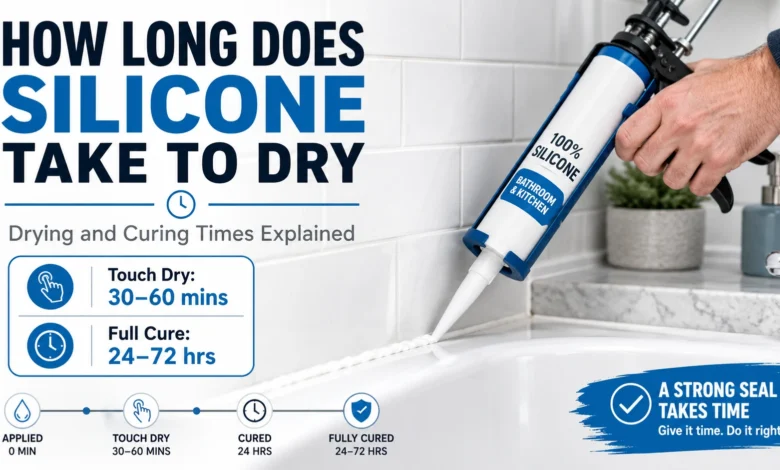
Silicone is widely used around showers, baths, sinks, toilets, windows and many other household areas because it creates a flexible, waterproof seal. However, one of the most common mistakes is assuming that silicone is ready as soon as the surface feels dry. In reality, drying and curing are different stages. This guide explains how long does silicone take to dry, what affects the waiting time and when it is safe to expose the sealant to water.
How Long Does Silicone Take to Dry?
How long does silicone take to dry? Most silicone sealants become dry to the touch within 30 to 60 minutes, but this does not mean they are ready for water or heavy use. Standard silicone normally requires about 24 hours to cure properly. Some thicker applications, specialist products or areas with poor ventilation may need between 48 and 72 hours before the seal becomes completely strong and waterproof.
The drying time can change depending on the product, room temperature, humidity, ventilation and thickness of the silicone bead. A thin line around a sink may cure more quickly than a thick joint around a bath. Always check the instructions printed on the tube because fast-curing, sanitary, exterior and aquarium-safe silicone products can have very different recommended waiting periods.
Understanding Silicone Drying and Curing Times
Drying and curing are often treated as the same thing, but they describe different stages. Drying happens when the outer surface forms a firm skin and no longer feels sticky. This can occur within 15 to 30 minutes. The silicone may look finished at this point, yet the material underneath can still be soft, weak and easily damaged by movement or moisture.
Curing is the chemical process that hardens the entire bead from the outside towards the centre. Fully cured silicone becomes flexible, durable and resistant to water. Most standard products need around 24 hours to complete this process, while deep or wide beads may take several days. A surface that feels dry should therefore never be used as the only sign that the silicone is ready.
How Long Does Silicone Take to Dry in a Bathroom?
How long does silicone take to dry in a bathroom? Under normal UK household conditions, it usually needs at least 24 hours before it is exposed to water. Bathrooms can remain cool and humid, particularly during winter, which may slow the curing process. Limited airflow can also trap moisture and prevent the silicone from developing a strong, even bond around fixtures and tiled joints.
Keep the bathroom dry and well ventilated while the sealant cures. Open a window or run the extractor fan if it does not create strong airflow directly across the fresh bead. Avoid hot showers, steaming baths and wet cleaning during this period. Gentle ventilation supports curing, but excessive heat or direct air can introduce dust and produce an uneven finish. Proper sealing is only one part of creating a reliable bathroom, so careful planning and professional bathroom installation are equally important.
How Long Does Silicone Take to Dry in a Shower?
How long does silicone take to dry in a shower? Most standard sanitary sealants should be left for at least 24 hours before the shower is used. Some rapid-curing products may become water-resistant within a few hours, but their individual instructions must be followed carefully. In a cold room or where the silicone bead is thick, waiting 48 hours may provide a safer result.
Using the shower too soon can allow water to travel behind the sealant before it has bonded securely to the tray, tiles or glass screen. This may eventually cause peeling, gaps, leaks or mould. Even when the silicone looks smooth and feels firm, the centre may still be curing. Allowing additional time can prevent a small sealing job from becoming a larger repair.
How Long Does Silicone Take to Dry Around a Bath?
How long does silicone take to dry around a bath? It normally requires about 24 hours before the bath can be used safely. The silicone must remain untouched and protected from splashes during this time. A wide bead, cool bathroom or poorly ventilated space can extend the curing period, so waiting up to 48 hours may be sensible when conditions are not ideal.
Some installers fill the bath with water before applying silicone because the additional weight places the bath in its normal loaded position. This can reduce movement and help prevent the cured bead from stretching or cracking later. However, the correct approach depends on the bath material, supporting frame and manufacturer’s guidance. The surrounding surfaces must always be completely clean and dry before sealing.
Silicone Drying Times Around Toilets and Sinks
Silicone around a toilet base usually becomes touch-dry within an hour, but it should be given around 24 hours to cure properly. The toilet may sometimes be used carefully if it is firmly fixed and does not move. However, touching the fresh silicone, cleaning the floor or placing pressure against the base can distort the bead and weaken its bond.
Silicone around a bathroom basin or kitchen sink also needs protection from water. Avoid splashing the sealed edges, using a wet cloth or allowing water to collect near the joint. Fresh silicone around taps, worktops and splashbacks can lift if moisture reaches the surface too soon. A full day of curing usually creates a stronger and more reliable waterproof barrier. Persistent leaks, loose fixtures or damaged pipework may require help from an experienced plumbing professional.
Drying Silicone on Plastic, Glass and Metal
How long does silicone take to dry on plastic, glass or metal? The typical waiting period remains around 24 hours, although surface preparation strongly affects the final result. Silicone must be applied to clean, dry materials that are free from grease, dust, soap, rust and cleaning chemicals. Poor preparation may cause the sealant to peel even after it has fully cured.
Glass normally offers excellent adhesion when it has been cleaned correctly, making silicone suitable for windows, shower screens and aquariums. Plastic can be more difficult because some sealants do not bond with every type. Metal surfaces should be free from oil and corrosion. Neutral-cure silicone may be recommended for certain metals because acidic products can sometimes cause staining or damage.
How Long Does Silicone Take to Dry Outside?
How long does silicone take to dry outside? Exterior silicone usually needs between 24 and 72 hours to cure fully, depending on temperature, rainfall, humidity and bead thickness. Moisture in the air supports the curing reaction, but direct rain can damage fresh sealant. Cold weather may slow the process, while extreme heat can make application and surface finishing more difficult.
Choose a dry period when sealing windows, doors, gutters, roofline joints or outdoor pipes. The surface should not be wet, frozen or covered with condensation. Check the weather forecast and allow enough time before expected rain. Outdoor products are designed to handle changing weather after curing, but they still need suitable conditions during the important first few hours after application.
How Long Does Aquarium Silicone Take to Dry?
Aquarium silicone requires more caution than ordinary household sealant because it will remain in constant contact with water and aquatic life. Most aquarium-safe silicone products require at least 24 to 48 hours to cure. Large repairs, structural joints and thick beads may need several days. The tank should never be filled until the sealant has completed the full curing period stated by the manufacturer.
Only use silicone clearly labelled as aquarium-safe. Standard bathroom products may contain mould-resistant chemicals or other additives that are unsuitable for fish tanks. A strong vinegar-like smell can indicate that the curing reaction is still taking place. When repairing an aquarium, allowing extra time is always safer than relying on the surface appearance or taking the risk of filling it too early.
Factors That Affect Silicone Drying Time
Bead thickness is one of the most important factors affecting curing time. A thin and even line allows moisture in the air to reach more of the material, helping it cure consistently. A thick bead may form a firm outer skin while remaining soft in the centre. This is why deep joints can require 48 hours, 72 hours or even longer.
Temperature, humidity and ventilation also play important roles. Silicone normally cures well in mild temperatures with moderate humidity and gentle airflow. Very cold conditions can slow the chemical reaction, while expired products may fail to cure properly. Dirty surfaces, excessive sealant, poor-quality application and incompatible materials can also result in sticky areas, weak adhesion or an uneven waterproof seal.
How to Help Silicone Cure Properly
Start by removing all old silicone, mould, soap residue, grease and loose material from the joint. Clean the surfaces carefully and allow them to dry completely before applying the new sealant. Use a steady bead that is large enough to fill the gap without becoming unnecessarily thick. A neat and consistent application usually cures more evenly and creates a more professional finish.
Provide gentle ventilation and leave the area untouched for the recommended time. Avoid using a hairdryer, heater or direct fan to force the silicone to dry faster. Strong heat can damage the surface and cause uneven curing. Do not add water or cleaning products to the bead. The safest method is patience, suitable room conditions and careful attention to the manufacturer’s instructions.
What Happens If Silicone Gets Wet Too Soon?
Fresh silicone that becomes wet too early may turn cloudy, lose its smooth finish or fail to bond correctly. Water can enter between the sealant and the surrounding surface, creating small hidden gaps. Over time, these gaps may lead to leaks, peeling, cracking or mould. A bead that appears normal on the outside can still be weakened underneath.
A few light splashes may not always ruin silicone if a strong surface skin has already formed. However, heavy water exposure before curing can require complete removal and reapplication. Allow the area to dry, then inspect the bead for lifting, softness or visible damage. Do not press deeply into the sealant because this can damage sections that are still curing.
How to Tell When Silicone Is Fully Dry
Fully cured silicone should feel firm but flexible, with no sticky or wet areas. It should remain securely attached to both sides of the joint and should not move when touched lightly. The surface should appear consistent, and there should be no strong curing smell. However, visual checks cannot always confirm whether the centre of a thick bead has hardened.
The most reliable approach is to follow the curing time shown on the product packaging. Even when silicone feels touch-dry after 30 minutes, it is usually not ready for water. Waiting at least 24 hours is sensible for most household applications. Longer curing times should be allowed for thick beads, cold rooms, outdoor sealing and aquarium repairs.
Conclusion
So, how long does silicone take to dry? Most products become touch-dry within 30 to 60 minutes, but they usually need around 24 hours to cure before normal use. Thick applications, cold bathrooms, exterior work and aquarium repairs may require between 48 and 72 hours. The exact waiting time should always be confirmed by checking the manufacturer’s instructions.
Allowing silicone to cure properly helps create a strong, flexible and waterproof seal. Rushing the process can lead to leaks, peeling and repeated repair work. Prepare the surface carefully, apply an even bead and keep the area protected from water. When there is any uncertainty, giving the silicone additional curing time is generally the safest and most effective choice.
FAQs
Can a shower be used twelve hours after applying silicone?
Standard silicone is unlikely to be fully cured after twelve hours, even when the surface feels dry. Unless the product is specifically described as rapid-curing and approved for early water exposure, waiting at least 24 hours is safer. Cold temperatures and thick applications may require an even longer period.
Does silicone dry faster in heat or cold?
Mild warmth usually supports curing, while cold conditions slow it down. However, intense direct heat from a hairdryer or heater should not be used because it can damage the surface. Gentle airflow, moderate humidity and a comfortable room temperature offer better conditions for creating an even and durable seal.
Can a fan help silicone dry more quickly?
A fan can improve air circulation, but it should not blow directly onto the fresh bead. Strong airflow may carry dust, hair or dirt onto the sticky surface. It can also cause the outer layer to develop unevenly. Normal room ventilation or a nearby extractor fan is usually a safer option.
Why is silicone still sticky after 24 hours?
The bead may be too thick, the room may be too cold or the product could be old or expired. Contamination from grease, soap or cleaning chemicals may also interrupt curing. Allow additional time and check the packaging. If the silicone remains soft or sticky for several days, removal and reapplication may be necessary.